Your bag is empty
Don't miss out on great deals! Start shopping or Sign in to view products added.
Shop What's New Sign in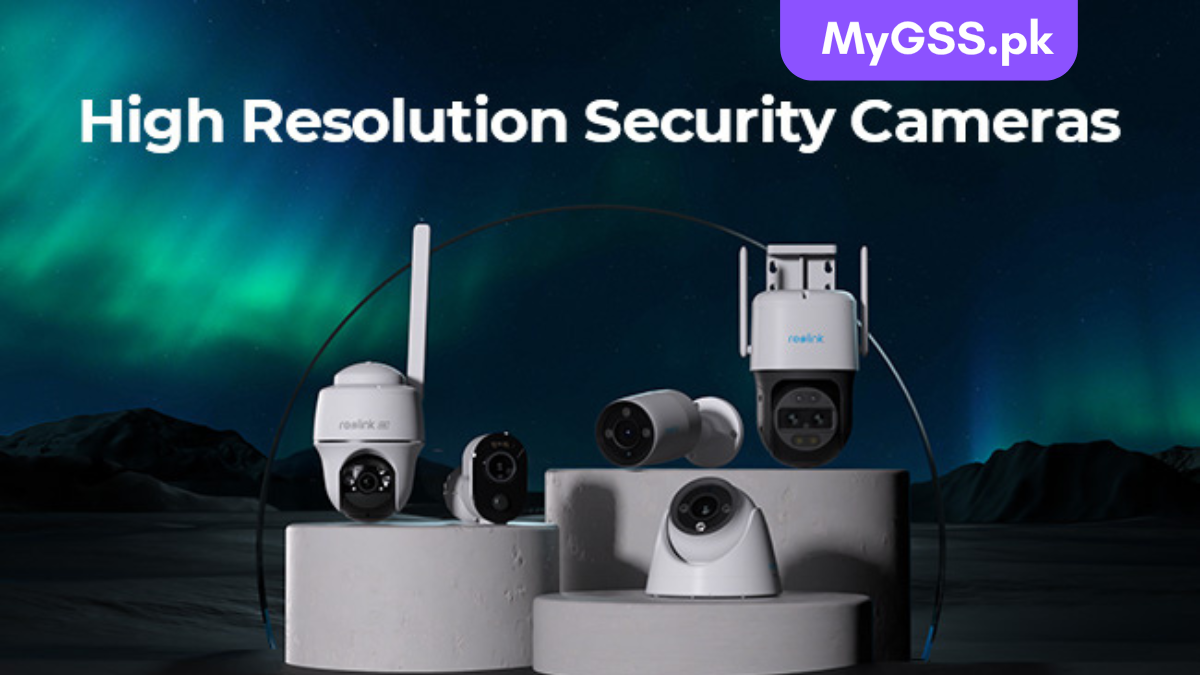
Security cameras have come a long way from grainy, black-and-white recordings that were barely useful for identifying a face. Today’s HD cameras can read a number plate from 20 meters away, recognize a visitor in full color at night, and stream crystal-clear footage straight to your phone anywhere in the world. But “HD” is a broad term — and not every HD camera is built the same way.
This guide breaks down what actually matters when choosing a high-definition security camera, so you can invest in a system that gives you real evidentiary-quality footage, not just a bigger number on the box.
Most buyers shop by megapixel count, and it’s a reasonable starting point — but resolution only measures the density of pixels in an image. It doesn’t tell you how well a camera performs in low light, how much detail survives video compression, or how wide an area it can cover clearly. A high-resolution camera with a poor sensor and cheap lens can still produce a blurry, noisy picture at night.
Think of resolution as the canvas size — sensor quality, lens quality, and processing determine what actually gets painted on it.
| Resolution | Common Name | Pixels | Best For |
|---|---|---|---|
| 2MP | 1080p Full HD | 1920×1080 | Small homes, entry gates, budget setups |
| 4MP | Quad HD | 2560×1440 | Shops, home exteriors, medium coverage areas |
| 5MP | Super HD | 2560×1920 | Facial detail at mid-range, retail counters |
| 8MP | 4K Ultra HD | 3840×2160 | Warehouses, parking lots, wide-area monitoring, license plate capture |
For most homes and small shops in Pakistan, 4MP strikes the best balance between clarity and affordable storage/bandwidth requirements. Reserve 4K for large open areas — a big parking lot or a warehouse floor — where you need to zoom into a wide frame after the fact and still make out detail.
A larger image sensor captures more light per pixel, which directly affects clarity — especially at night. Two cameras with identical megapixel counts can produce very different image quality if one has a larger sensor. This is why premium models from Hikvision and Dahua often outperform cheaper cameras with the same resolution spec.
A fixed lens (usually 2.8mm or 3.6mm) is fine for general coverage, but if you need to identify faces or read text at a distance, look for a varifocal lens that lets you zoom in optically rather than digitally. Digital zoom on a recorded 4MP file just stretches existing pixels — it does not add detail.
This is where most buyers get surprised. There are three tiers worth knowing:
If your camera faces a doorway, gate, or window with strong backlighting, WDR prevents the frame from turning into a silhouette. This matters far more than most buyers realize for entrances that face direct sunlight during the day.
Higher resolution means larger file sizes — unless the camera uses efficient compression. H.265+ (sometimes labeled Smart H.265) can cut storage requirements by up to 90% compared to older H.264 encoding, without a visible drop in quality. If you’re comparing two similarly priced 4MP cameras, the one with H.265+ support will save you significantly on SD card or NVR storage over time.
Wired (PoE) cameras connected to an NVR generally deliver the most reliable high-resolution footage with no compression loss from Wi-Fi bandwidth limits. They’re the standard choice for businesses, warehouses, and multi-camera home setups.
Wireless (Wi-Fi) cameras have improved enormously and are now genuinely capable of clean 4MP and even 4K streaming — but picture quality can degrade if the Wi-Fi signal is weak or the router is far from the camera. For remote locations without reliable electricity or internet, 4G and solar-powered cameras (popular for farmhouses, plots, and rural properties across Pakistan) use a local SIM instead of Wi-Fi, which solves both the power and connectivity problem in one device.
Higher resolution eats more storage — plan accordingly:
Homes: 4MP indoor/outdoor cameras with full-color or smart night vision cover most residential needs. Two-way audio is worth prioritizing for gate and door monitoring.
Shops and retail counters: 4MP–5MP cameras positioned at eye level near the till, paired with a wide-angle model covering the full shop floor, gives you both face-level detail and general coverage.
Warehouses and large compounds: 8MP/4K PTZ (pan-tilt-zoom) cameras let a single unit cover a wide area while still allowing digital zoom into specific detail when reviewing footage.
Farmhouses and remote plots: 4G solar-powered PTZ cameras solve the two biggest rural challenges — no grid electricity and no fixed internet — while still delivering HD resolution over mobile data.
Overseas Pakistanis monitoring property remotely: Any Wi-Fi or 4G HD camera paired with a reliable mobile app (VStarcam Ultra, Hik-Connect, IMOU Life, EZVIZ App, DMSS, or Tapo App depending on brand) allows live viewing and playback from anywhere in the world.
Different brands tend to have different strengths:
Not usually. For most rooms, doorways, and small yards, 4MP already provides enough detail to identify faces and activity clearly. 4K is most valuable for wide, open areas like large parking lots or warehouse floors where you need to zoom into a specific spot after recording.
No — night vision performance depends on sensor size, lens aperture, and IR/full-color technology, not resolution alone. A well-built 4MP camera with full-color night vision will often outperform a poorly built 8MP camera in the dark.
It depends on resolution, compression, and number of cameras, but H.265+ compression can reduce storage needs by up to 90% compared to older formats. A 2TB hard drive is a reasonable starting point for a typical 4-camera 4MP home setup.
Yes — 4G-enabled cameras use a mobile SIM instead of Wi-Fi, making them ideal for farmhouses, plots, or areas with unreliable internet. Combined with solar power, they can run entirely independent of both grid electricity and a fixed internet connection.
Most modern Wi-Fi and 4G HD cameras are designed for DIY setup, guided by the manufacturer’s app. For questions during setup, free WhatsApp and phone support is available to walk you through the process step by step.
Looking for the right HD camera for your specific setup? Browse our full range of Hikvision, Dahua, IMOU, EZVIZ, VStarcam, Tapo, Tenda, and V380 security cameras, with nationwide delivery and a 10-day easy return policy.